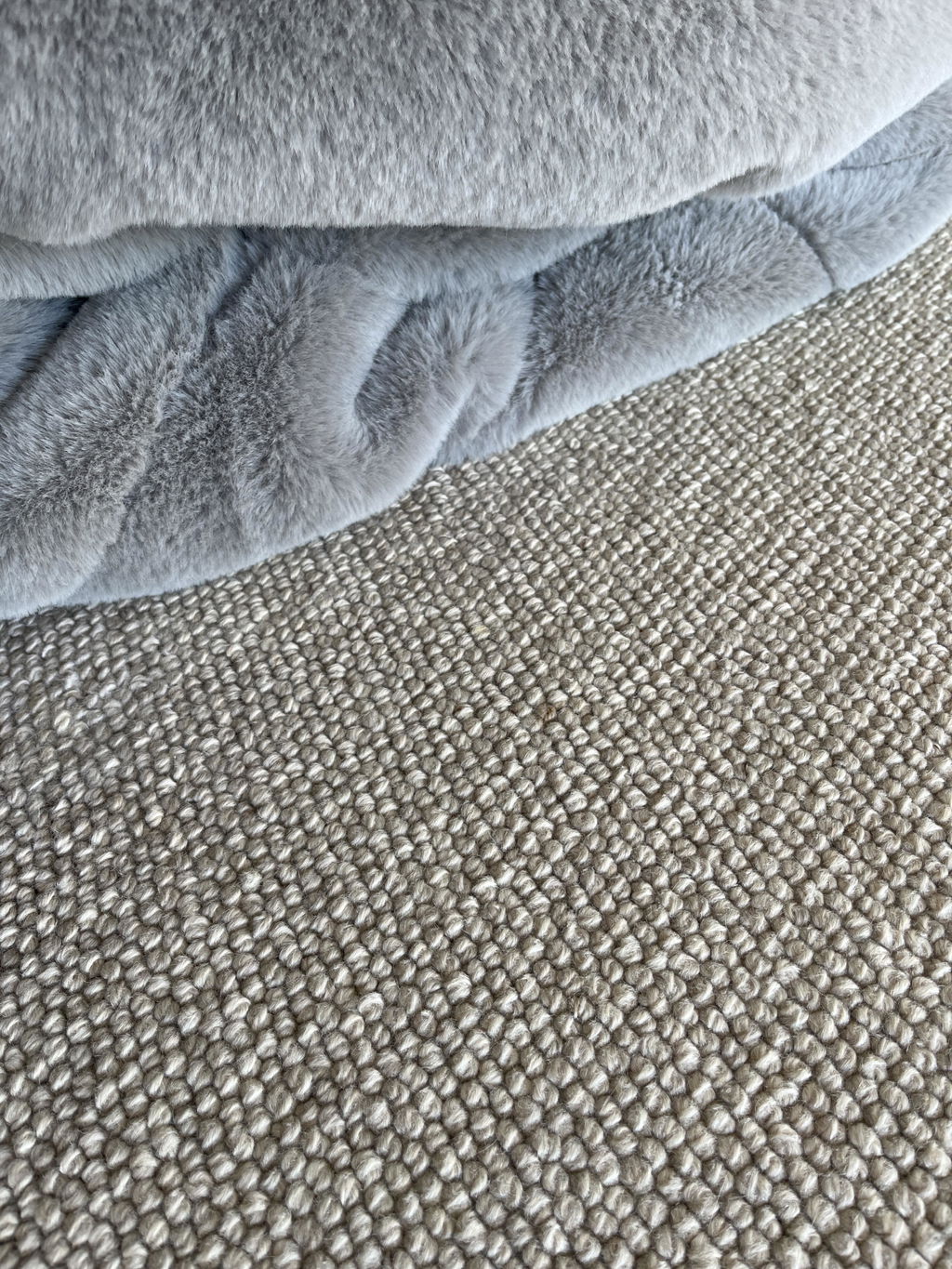
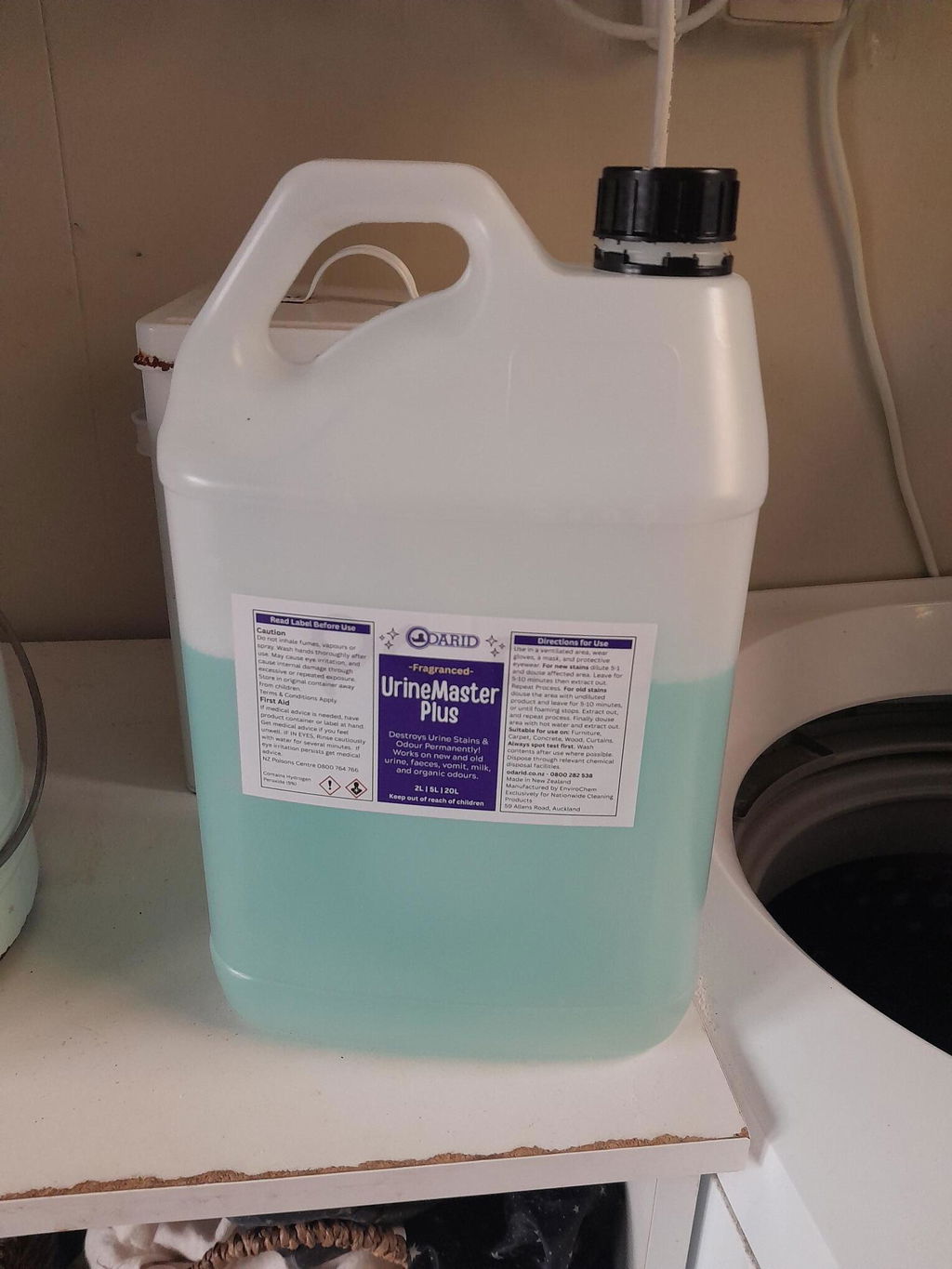
To remove pet urine stains for good, you have to break down the uric acid left behind, not just clean the mark you can see. Blot fresh urine straight away (never rub), find the full spread of the stain, then saturate the whole area, including the underlay or cushion foam beneath, with a product that breaks uric acid down. A hydrogen peroxide remover like Odarid shows visible results in 30 to 60 seconds and is safe for pets and family once dry. Vinegar and baking soda can help on a stain you catch within minutes, but they don't touch dried uric acid crystals, which is why a "cleaned" spot so often smells again on the first warm or humid day. Below: why it happens, step by step removal for every surface, and an honest comparison of the common methods.
In this article
- What actually causes pet urine smell?
- Why does the urine smell keep coming back?
- How do you find every urine stain?
- How do you remove pet urine stains from carpet?
- How do you remove old, dried-in urine stains?
- How do you get urine smell out of a rug?
- How do you get dog urine out of a couch or sofa?
- Should you treat urine stains before carpet cleaning?
- Vinegar, baking soda, enzymes or hydrogen peroxide: which works best?
- Why does my carpet still smell like dog?
- FAQ
What actually causes pet urine smell?
Fresh urine doesn't smell that strong. The problem starts as it breaks down. Pet urine contains urea, salts, proteins and uric acid. Bacteria feed on the urea and release ammonia, which is the sharp smell you notice first. As the stain ages, further breakdown produces sulphur-type compounds that give old urine its sour, lingering pong.
The real culprit for long-term odour is uric acid. Unlike the rest of the urine, it doesn't dissolve in water. As the stain dries, it forms tiny crystals that bond tightly to carpet fibres, underlay, fabric, cushion foam, timber and even concrete. That's why water, shampoo and most home remedies can't shift it. Cat urine is usually more concentrated than dog urine, so it tends to smell stronger, but the chemistry is the same.
Why does the urine smell keep coming back?
If you've cleaned a spot and the smell returns days or weeks later, one of these is almost always why:
- Humidity reactivates the crystals. Uric acid crystals pick up moisture from the air and release odour again. A damp NZ winter, a muggy summer day or the heat pump going on is often all it takes.
- The stain is bigger underneath. Urine spreads sideways as it soaks down, so the patch in the underlay or foam is usually much wider than the mark on top. Treat only the visible spot and you leave the rest behind.
- The product only masked it. Fragranced sprays and deodorisers cover the smell for a day or two. They don't remove the source.
- Heat set it. Steam and hot water extraction can bond urine proteins into synthetic fibres and push urine deeper into the underlay.
- Your pet can still smell it. Dogs and cats return to spots that smell like a toilet to them. A repeat accident in the same place is a sign the original stain wasn't fully treated.
How do you find every urine stain?
You can't treat what you can't find. Dried urine is often invisible in daylight, especially on patterned or darker carpet. Wait until evening, turn the lights off and sweep a UV blacklight torch slowly across the floor: urine residue glows a yellow-green colour. Mark each spot (a piece of painter's tape works well) and note roughly how far it spreads.
Two honest caveats: not every stain glows, and some old cleaning products glow too. Use your nose as a back-up, getting down low where the smell is strongest. Our full guide on how to find hidden pet urine with UV light walks through it room by room.
How do you remove pet urine stains from carpet?
Here's the 7-step method we recommend for carpet. It works for dog and cat urine, fresh or old.
- Blot, don't rub. For a fresh accident, press paper towels or a clean cloth firmly into the spot and lift. Stand on it if you need to. Rubbing spreads urine sideways and deeper.
- Find the full spread. Use a UV torch or your nose to find the edge of the stain, then add a margin of about 10cm all round.
- Patch test. Try your product on a hidden area first (inside a wardrobe or under a couch), especially on wool or brightly dyed carpet.
- Saturate, don't mist. Apply enough product to soak through the pile and into the underlay, the same depth the urine reached. A light spray on top is the most common reason treatment fails.
- Leave it to work. With Odarid, don't scrub or rinse. You'll often see it fizz or foam as it reacts with the urine, which is normal and usually heavier on older stains.
- Let it dry completely. Open windows or run a fan. Keep pets and kids off the area until it's fully dry, which usually takes a few hours depending on how wet the carpet is and the weather.
- Check and repeat if needed. Once dry, sniff the area again (a warm, humid day is a good test). Old or repeat-offence spots sometimes need a second treatment.

Hydrogen peroxide formula that breaks down uric acid crystals at the source. Visible results in 30 to 60 seconds, no scrubbing. Fragrant or Non Fragrant.
How do you remove old, dried-in urine stains?
Old stains follow the same steps, with three differences. First, the stain is almost always wider and deeper than it looks, so be generous with the area you treat. Second, the product needs to reach the dry crystals in the underlay, so apply more than you think you need. Third, expect to treat twice on stains that are months old or that have had several accidents on top of each other. Heavier foaming on an old stain is a sign of how much residue has built up, not a problem with the product.
If a stain has already been through a round of vinegar, baking soda or a supermarket spray and come back, don't try another home remedy. That's the point to switch to something that actually breaks uric acid down.
How do you get urine smell out of a rug?
Treat a rug like carpet, with a few extra checks:
- Read the care label. Wool, silk, jute and hand-dyed rugs can react differently to cleaners than synthetic carpet. Patch test on a corner or the underside.
- Check both sides. Flip the rug over. Urine often soaks straight through to the backing and the floor underneath, which needs treating too (Odarid can be used on timber and concrete).
- Treat from the top, dry from both sides. Once saturated, prop the rug up over a couple of chairs or an airer so air gets underneath. A rug left flat on a damp floor dries slowly and can pick up a musty smell.
How do you get dog urine out of a couch or sofa?
Upholstery is the trickiest surface because urine runs through the fabric into the cushion foam, where it can sit for months.
- Blot hard with towels, using your body weight to draw liquid up from the foam.
- If the covers zip off, remove them and check the foam insert. A dry-looking cover can hide a wet cushion.
- Patch test on the back or underside of the couch.
- Saturate the fabric and the foam where the urine reached. For removable covers, treat the cover and the insert separately.
- Stand cushions on their edge to dry, ideally in a well-ventilated room or with a fan. Don't sit on it until it's fully dry.
Faux leather and leather are easier because urine can't soak in far, but it pools in seams and stitching, so treat those lines carefully and wipe the surface once done. Always follow the manufacturer's care guidance for leather.
Should you treat urine stains before carpet cleaning?
Yes, always. This is one of the most common and costly mistakes we hear about. Professional carpet cleaning (and hire machines) use hot water extraction. On an untreated urine stain, that hot water rehydrates the uric acid and spreads it through the carpet and underlay, and the heat can set the proteins into the fibres. People regularly end up with several smelly patches where there used to be one, and a carpet that smells worse after cleaning than before.
The fix is simple:
- Find every spot with a UV torch a few days before the clean.
- Treat each one thoroughly with a urine remover and let it dry completely.
- Tell your carpet cleaner where the pet areas are so they don't over-wet them.
This matters most at the end of a tenancy. If you manage rentals, our end-of-tenancy pet odour page for property managers covers treating whole properties.

For treating multiple rooms, whole-house pre-treatment, or multi-pet homes. Same formula, best value per litre.
Vinegar, baking soda, enzymes or hydrogen peroxide: which works best?
Home remedies do have a place. On a fresh accident caught within minutes, blot it, apply equal parts white vinegar and water, blot again, then sprinkle baking soda once it's nearly dry and vacuum it up the next day. That will lift a lot of the fresh smell. Household 3% hydrogen peroxide can also help on a fresh spot, but patch test first as it can lighten some dyes. What none of these can do is break down uric acid that has already dried in. Here's how the options compare:
| Method | How it works | Old, dried stains? | Speed | Watch out for |
|---|---|---|---|---|
| Vinegar and water | Mild acid neutralises some fresh ammonia smell | No | Immediate, but temporary | Vinegar smell; smell often returns with humidity |
| Baking soda | Absorbs moisture and some surface odour | No | Overnight | Only works on the surface |
| Fragranced sprays | Masks the smell with perfume | No | Immediate, lasts hours to days | Source stays; pets may keep re-marking |
| Enzyme cleaners | Enzymes and bacteria digest organic residue | Sometimes, often with repeat treatments | Hours to days of dwell time | Needs moisture, warmth and time; other cleaners can stop them working |
| Hydrogen peroxide remover (Odarid) | Oxidises uric acid crystals and odour-causing bacteria at the source | Yes, including stains other products have failed on | Visible results in 30 to 60 seconds | Patch test first; keep pets off until dry |
Enzyme cleaners can work well on fresh accidents, and we're not going to pretend otherwise. We go into the detail in our enzyme cleaner post. For older stains, rentals and multi-pet homes, a hydrogen peroxide remover is faster and more reliable. Humane World for Animals also has a useful overview.

Enough to saturate old stains properly and refill your spray bottle. Ideal for puppies, older pets and repeat spots.
Why does my carpet still smell like dog?
A general "doggy" smell is usually skin oils, dander and outdoor grime, plus (in plenty of Kiwi homes) a few old urine spots nobody knew about. Vacuum slowly in two directions, UV-check and treat any urine spots, wash pet bedding weekly, avoid over-wetting when you shampoo, and ventilate on dry days.
Frequently asked questions
Will urine smell eventually go away on its own?
Not usually. The ammonia smell may fade, but uric acid crystals stay in the carpet or foam and release odour again whenever humidity rises. Without treatment, old urine can keep smelling for years.
Does vinegar get rid of pet urine smell permanently?
No. Vinegar can reduce the smell of a very fresh accident, but it doesn't break down uric acid, so the smell on a dried stain will return once the air gets humid.
Why does my carpet smell worse after shampooing?
Hot water rehydrates dried uric acid and spreads it deeper and wider through the carpet and underlay, releasing a fresh wave of odour. Treat urine spots and let them dry before any shampoo or professional clean.
How long does Odarid take to work?
You'll see visible results in 30 to 60 seconds. Leave it to dry fully without scrubbing or rinsing. Very old or heavy stains may need a second application once dry.
Is hydrogen peroxide safe around pets?
Odarid is safe for pets and family once the treated area is completely dry. Keep them off the area while it's wet and follow the label directions. There's more detail in our post on whether hydrogen peroxide is safe around pets.
Can I use a steam cleaner on pet urine?
Not on untreated urine. Steam heat can set urine proteins into synthetic fibres and lock the smell in. Treat and dry the stain first; steam cleaning afterwards is fine.
NZ-made Odarid, pet urine odour and stains gone for good.
Odarid's hydrogen peroxide formula breaks down uric acid crystals and odour-causing bacteria at the source, rather than covering them with fragrance. Spray until saturated, no scrubbing, and it's safe for pets and family once dry. Rated 4.9/5 from 760+ reviews, in 500ml, 2L and 5L, Fragrant or Non Fragrant.
Shop Odarid 500ml →