You spot a fresh pet mess on the carpet, reach for the bottle under the sink, and then pause. Is hydrogen peroxide safe around pets, or are you about to swap one problem for another? It’s a fair question, especially in Kiwi homes where dogs, cats, and curious noses are usually close to the action.
The short answer is yes, hydrogen peroxide can be safe around pets when it is used correctly, at the right strength, and allowed to dry fully before your pet gets back into the area. The longer answer matters more. Safety depends on concentration, surface type, ventilation, how it is applied, and whether your pet can lick, walk through, or inhale the product before it has finished doing its job.
Is hydrogen peroxide safe around pets when cleaning?
Used properly, hydrogen peroxide is one of the more practical cleaning ingredients for pet households. It breaks down into water and oxygen, which is part of why it is so useful for odour and stain removal. It does not simply cover smells with fragrance. It works by oxidising the compounds causing the problem, which makes it especially effective on organic messes like urine, vomit, and tracked-in grime.
That said, “safe” does not mean “harmless in every situation”. Undiluted or high-strength hydrogen peroxide can irritate skin, eyes, and airways. If a dog laps it up from a freshly treated floor or a cat walks across a wet patch and then grooms its paws, that is not ideal. The issue is usually not the ingredient in principle. It is poor use, wrong strength, or allowing pets back too soon.
For most household cleaning, lower concentrations are the relevant ones. These are very different from industrial-strength solutions, which should never be used casually around pets or people.
What makes hydrogen peroxide risky for pets?
The biggest risk is exposure while the product is still wet. Pets do not read labels, and they investigate the world with their paws, tongues, and noses. A treated carpet corner may look harmless to you, but to a dog it can be worth a sniff and a lick.
Hydrogen peroxide can cause irritation if it comes into direct contact with eyes or sensitive skin. If swallowed in enough quantity, it may lead to vomiting, drooling, stomach upset, and discomfort. Cats can be particularly sensitive because of their grooming habits. A product on the fur, paws, or bedding can end up being ingested later.
There is also a practical cleaning risk. Using straight hydrogen peroxide from a random bottle on soft furnishings or carpet without testing can bleach or lighten some fabrics. So the question is not only whether it is safe around pets, but whether it is safe for your surfaces too.
Where hydrogen peroxide works well in pet homes
When formulated for the job, hydrogen peroxide can be excellent for breaking down pet urine odours and stains. This matters because pet mess is not just a visible issue. If the source is left behind in carpet fibres, underlay, grout lines, or upholstery, the smell stays put even after the surface looks clean.
That is why many pet owners get frustrated with supermarket cleaners. Plenty of them add perfume, but perfume is not odour removal. It only competes with the smell for a while. Hydrogen peroxide-based cleaners, especially when combined with other targeted stain and odour-removing ingredients, are designed to tackle the source of the problem instead.
In practical terms, that can make a real difference on carpets, rugs, pet bedding, hard floors, and furniture where urine or vomit has soaked in. The better the formulation, the less guesswork for the user.
Is hydrogen peroxide safe around pets on carpets and fabrics?
Usually yes, if the product is intended for those surfaces and you follow the instructions. Carpets and fabrics are where pet owners tend to use it most, but they are also where misuse is common.
A soaked carpet patch can hold product below the surface longer than you think. If your dog lies down there too soon or your cat returns to inspect it, exposure goes up. The safest approach is to use only as much product as directed, allow proper drying time, and keep pets away from the area until it is completely dry and odour-free.
Colourfastness matters too. Always patch test in a hidden area first. If a cleaner is professional-strength, that is a good thing for performance, but it also means the label is there for a reason.
How to use hydrogen peroxide safely around pets
Safe use is mostly about control. Start with the right product for the right mess. A cleaning formula designed for pet accidents is far more reliable than improvising with a bottle from the bathroom cabinet.
Ventilate the room well, especially in smaller spaces. Open windows if you can. Apply the product only to the affected area rather than spraying it widely around your home. More is not better. Excess product increases drying time and the chance that a pet will come into contact with it.
Once applied, keep pets out of the area until everything is fully dry. If you have a cat, be extra cautious with treated fabrics, scratching posts, or bedding because cats will groom any residue they pick up. If you have a dog who likes licking floors, block access for longer than you think you need.
After cleaning, rinse any tools you used and store the product securely. Under the sink is only fine if your pet cannot get to it. Some dogs are surprisingly determined when there is a bottle with an interesting smell nearby.
What not to do
Do not use high-concentration hydrogen peroxide unless you are trained and equipped for it. Household pet messes do not call for industrial-strength chemistry.
Do not mix hydrogen peroxide with other cleaning products unless the manufacturer specifically says it is safe. Mixing random chemicals is where simple cleaning jobs turn into avoidable hazards.
Do not use it as a pet skin treatment, ear cleaner, or home remedy without veterinary advice. This is where confusion often starts. People hear that hydrogen peroxide is useful for cleaning, then assume it is also suitable for animal care. That is a different question entirely, and often the answer is no.
It is also no longer recommended to make pets vomit with hydrogen peroxide unless a vet specifically instructs you to do so. Old advice lingers, but it is not a casual first-aid trick.
Choosing the safer option for pet odours and stains
If you are dealing with repeat accidents, old urine patches, or odours that keep coming back, the safest route is usually a purpose-built pet cleaning product rather than DIY peroxide mixing. That gives you clearer instructions, more predictable results, and a formula designed to remove the cause instead of masking it.
This is where specialised solutions earn their keep. In a pet home, performance and safety have to work together. You want strong enough chemistry to break down the mess properly, but controlled enough that once the job is done and the area is dry, your household can get back to normal.
A well-formulated hydrogen peroxide cleaner can do exactly that. Cleansmart’s approach, like any good problem-solving cleaner, is based on elimination rather than perfume. That is what pet owners actually need when the lounge smells fine for an hour and then the urine odour creeps back.
When to call your vet
If your pet drinks hydrogen peroxide, gets it in their eyes, has skin irritation after contact, or shows signs like drooling, vomiting, coughing, pawing at the mouth, or unusual lethargy, contact your vet promptly. The same applies if you are unsure how much they were exposed to.
Do not wait for symptoms to become obvious. Pets, especially cats, can hide discomfort well. Quick advice is better than guesswork.
Hydrogen peroxide has a proper place in pet-household cleaning, but it is not a free pass to use any bottle, any way, on any surface. Used correctly, it can be a smart tool for removing the mess and the smell at the source. Used carelessly, it can irritate pets, damage surfaces, and create more work than it saves. If you want the best result, choose the product carefully, follow the directions exactly, and give it enough time to dry before paws are back on the floor.
Want a pet-safe cleaner that actually eliminates odours?
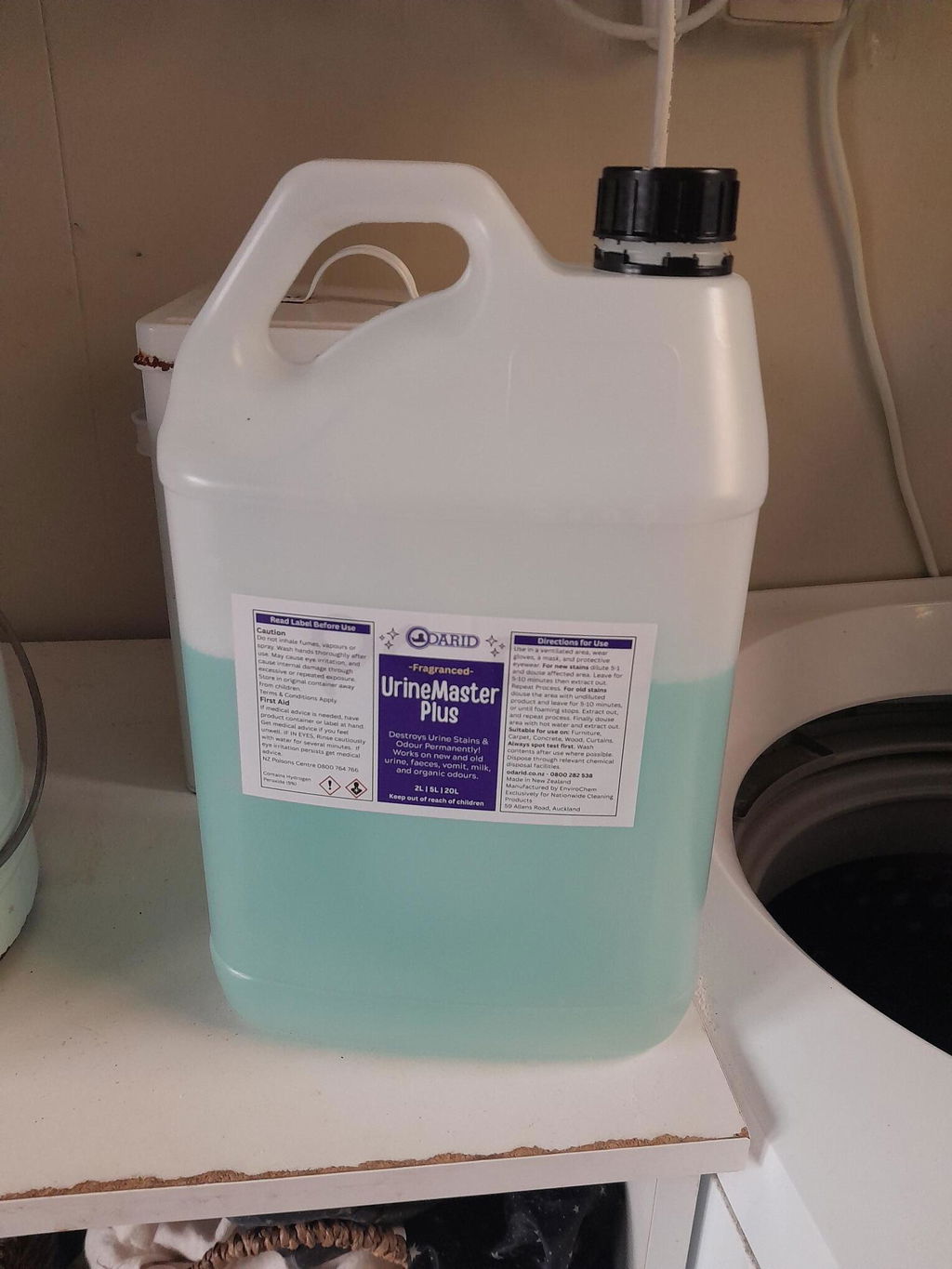
Odarid is a bio-enzymatic, hydrogen peroxide-based formula designed for pet households — non-toxic once dry, safe for carpets, rugs, and furniture. NZ-made.
Shop Odarid →