That sour, ammonia hit when you sit down is never “just a bit of smell”. If a dog has weed on the couch, the urine salts and proteins can sink past the surface fabric and lodge in the cushion foam and inner lining. That is why a quick wipe, a scented spray, or a steam clean can seem to work for a day… then the odour creeps back the moment the room warms up.
If you want to remove dog urine smell from couch properly, the goal is simple: get the urine residue wet again, break it down at the source, and dry it out fully so nothing is left to reactivate.
Why the smell keeps coming back
Fresh urine is mostly water, but as it dries it leaves behind uric acid crystals and other organic residues. These residues cling to fibres and foam. When humidity rises (think closed-up lounge on a rainy weekend) those crystals can rehydrate and release odour again.Fragrance-heavy products often fail because they only sit on the surface and mask what is still trapped underneath. Heat can make it worse. Hot water extraction or steaming may spread the urine deeper into padding, and heat can “set” proteins, making the stain more stubborn. You do not need a harsher perfume. You need a solution that targets the residue.
Before you start: work out what you’re dealing with
If the accident is fresh and still wet, you are in the best-case scenario. If it is old, you will likely have two problems: a lingering smell and a hardened deposit down in the foam.Take 10 seconds to check the couch type. Removable cushion covers are easier. Tight-weave upholstery can hide urine that has run through seams. Faux leather is simpler because urine cannot soak in far, but it can pool in stitching and creases.
If you can, find the exact spot. Your nose gets you close, but a torch in a darkened room sometimes helps with staining. If you are missing the source, you will keep chasing odour.
Step 1: Blot hard, but don’t scrub
For fresh urine, start with absorbent paper towels or clean cloths and press down firmly. Stand on the spot if you need to, using your bodyweight to pull liquid up from the fabric.Avoid scrubbing. Scrubbing pushes urine outward and downwards, increasing the area you have to treat.
If it is already dry, do not skip straight to deodoriser. You need to rehydrate the residue so the treatment can reach it.
Step 2: Do a quick colourfast test
Any effective treatment needs contact time and enough moisture to penetrate. That means you should test an inconspicuous area first (back skirt, underside of cushion) especially on delicate fabrics.If dye transfers to your cloth, proceed gently and keep the area as controlled as possible. It does not mean you cannot treat it. It means you should avoid flooding and avoid aggressive rubbing.
Step 3: Re-wet the spot so you can remove it
This sounds backwards, but it is the difference between “smells fine for now” and “sorted”. Lightly dampen the affected area with cool water first if the urine is old and crusted. You are not soaking the whole couch. You are softening the deposit so a targeted cleaner can actually work.Then blot again. This quick pre-step often pulls out a surprising amount of old residue.
Step 4: Use an enzyme-based urine treatment (and use enough)
To remove dog urine smell from couch long term, enzyme action is your friend because it breaks down the organic material rather than covering it up.Here is the part most people get wrong: they mist the surface and call it done. If the urine has reached foam, the foam needs treatment too. Apply the product so the area is properly saturated to the depth of the contamination. On removable covers, treat both the outside fabric and the inner side if urine has passed through.
Give it time. Enzymes are not instant perfumes. They need contact time while the area is damp. If your couch is in a dry, breezy spot, you can loosely place a clean towel over the area to slow evaporation while the enzymes work.
It depends on the severity, but if the smell returns after drying, it usually means the urine was deeper than your first application. Repeat with a slightly larger treated area. Urine spreads, especially through cushion foam.
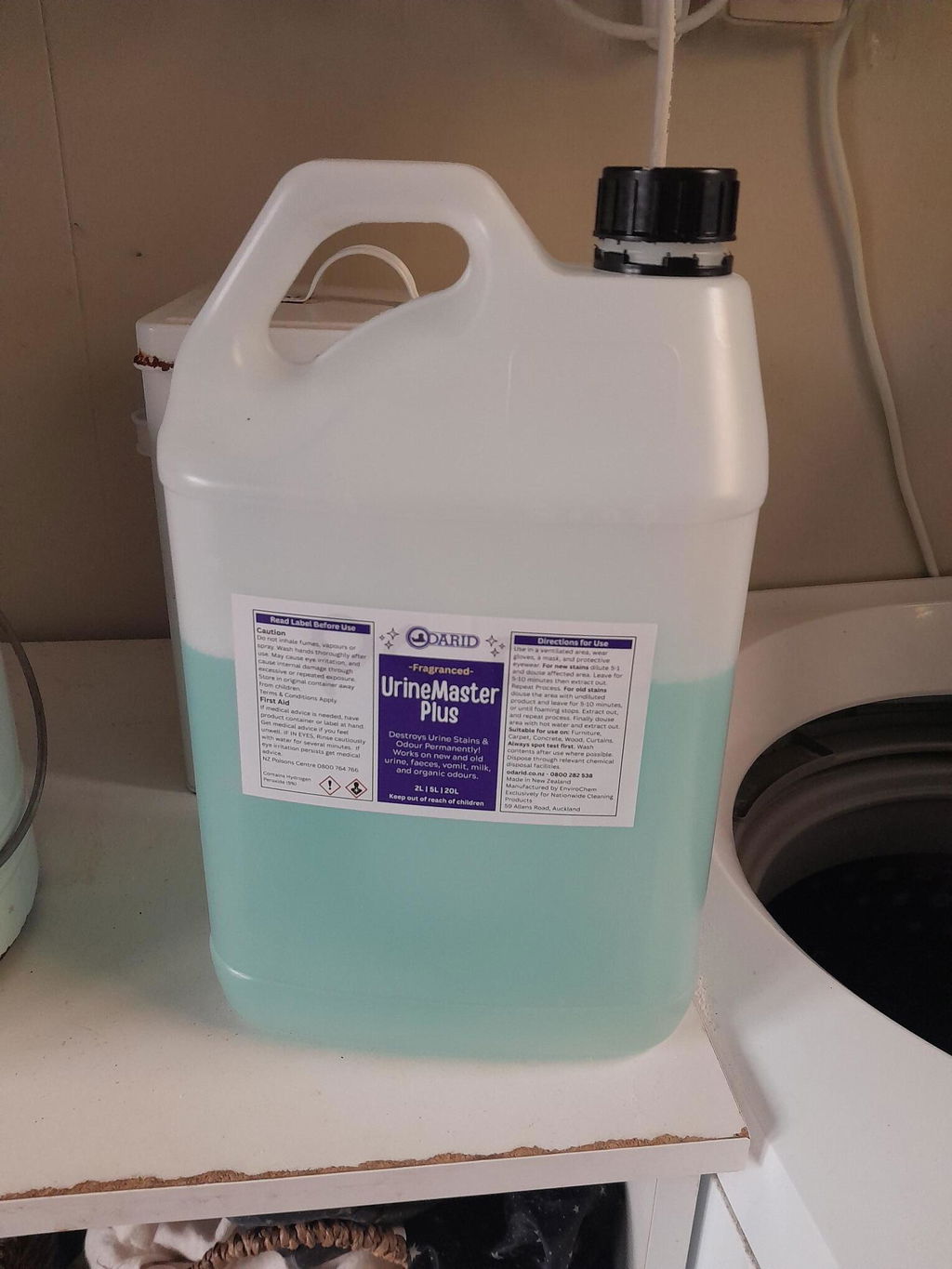
For Kiwi homes with pets (and the occasional repeat offender), a purpose-built urine odour and stain remover like Odarid from Cleansmart is designed for this exact job - eliminating the source instead of masking it.
Step 5: Rinse lightly, then blot again
Once the treatment has had time to work, you want to remove as much moisture and loosened residue as possible.Use a clean damp cloth with cool water to lightly rinse the area (do not drench it), then blot firmly with dry towels. Your aim is to lift out what you have broken down, not leave it sitting in the cushion.
If you have a wet/dry vacuum, this is where it earns its keep. Extracting moisture after treatment can dramatically reduce dry time and reduce the chance of any lingering whiff.
Step 6: Dry properly (this is where “nearly fixed” becomes fixed)
A couch that stays damp will smell. Not necessarily of urine, sometimes of mustiness, but either way it is not the result you want.Set up airflow. Open windows, run a fan, and if the weather is humid, use a dehumidifier. Rotate cushions so air can reach all sides. If the cushion covers are removable and washable, wash them according to the label and dry them fully before reassembling.
Avoid heat blasting. A hairdryer on hot can bake residues and can shrink or distort some upholstery. Cool moving air is safer and usually faster over the whole drying period.
What not to do (and why)
Vinegar and baking soda are popular online, but they are not a sure thing on couches. Vinegar can help temporarily neutralise ammonia smell, but it does not reliably remove uric acid crystals embedded in foam. Baking soda can absorb some odour at the surface, yet it does not break down the underlying residue, and it can leave gritty powder embedded in upholstery if you overdo it.Steam cleaning is another trap. Heat and moisture can drive urine further in, especially if you have not broken down the residue first. If you love using your upholstery machine, treat with an enzyme cleaner first, then extract with cool or lukewarm water, and keep passes slow and controlled.
If the smell is still there after one attempt
A persistent odour does not mean you have failed. It means the contamination is deeper, wider, or has reached a layer you have not treated.Start by sniff-testing systematically. Smell the cushion cover, then the foam, then the couch base. If the foam is the main offender and it is heavily soaked through, there are cases where replacement foam is the most practical option, especially in older couches where the foam has absorbed multiple incidents.
If it is just one spot but it keeps returning, do a second enzyme application with a slightly wider perimeter and longer damp time, then extract and dry again. Repeating is normal for old stains because dried urine can behave like layers.
Stop repeat marking: the hidden part of the problem
Even when you remove the smell to human noses, dogs may still detect trace cues and re-mark. That is why complete elimination matters.Also look at the “why”. Puppies, anxious dogs, older dogs with mobility issues, and dogs with urinary tract problems can all have accidents. If it is a sudden change, a vet check is worth it.
In the home, block access during drying and for a few days afterwards. If the couch is the new favourite loo spot, remove the opportunity until the habit breaks.
A quick word on safety in family homes
For households with kids, pets, and anyone sensitive to fragrance, the safest approach is usually: targeted product, minimal unnecessary chemicals, and thorough drying. Ventilation matters. So does using the product exactly as directed - more is not always better, but enough to reach the affected depth is essential.If you are ever unsure about a delicate fabric or a vintage couch, test first and treat gently. Getting results does not require wrecking your upholstery.
A clean couch should smell like nothing at all. Once you get the source out properly and keep the cushion fully dry, you get your lounge back - and you stop bracing yourself every time someone sits down.