That stale, sour smell that hits when the room warms up is usually your biggest clue. If you need to remove old urine smell floorboards have absorbed over months or even years, a quick mop or a fragranced spray will not touch the real problem. Urine soaks past the surface, settles into timber fibres, seeps into joins, and can even reach the subfloor. If you want the smell gone properly, you need to treat the source, not cover it.
In Kiwi homes, this often shows up after toilet-training accidents, an elderly pet, a rental history you did not ask for, or a spot that was cleaned too late. Old urine odour is stubborn because it changes over time. As it breaks down, it forms compounds that cling hard to porous materials. That is why floorboards can keep releasing that smell long after the visible stain seems gone.
Why old urine smell stays in floorboards
Timber is porous. Even sealed floorboards are not fully protected once liquid gets into gaps, cracks, nail holes, board ends, or worn patches in the coating. The top may look dry, but the contamination can sit deeper in the wood and continue producing odour whenever humidity rises.
There is also a big difference between fresh urine and old urine. Fresh accidents are easier to flush out and neutralise. Old urine has had time to crystallise, bond into the timber, and affect surrounding materials. In bad cases, the smell is not only in the boards. It may also be in the underlay nearby, skirting boards, wall edges, or the subfloor beneath.
This is where many people waste time and money. They scrub harder, use bleach, or keep adding stronger perfume. The room smells cleaner for an hour, then the urine odour creeps back. That is not because you missed a spot on the surface. It is because the source is still active below it.
How to remove old urine smell from floorboards properly
The first job is locating the full affected area. What you can smell is not always limited to what you can see. Urine often spreads wider than the stain, especially along board joins. If the odour is strongest in the morning sun or after the room has been shut up, mark that zone before you start cleaning.
Once you know the area, dry cleaning comes first. Vacuum up dust, pet hair, and loose debris so the treatment can reach the timber properly. Do not soak the floor straight away. Overwetting can push contamination deeper and may swell some boards, especially older timber floors.
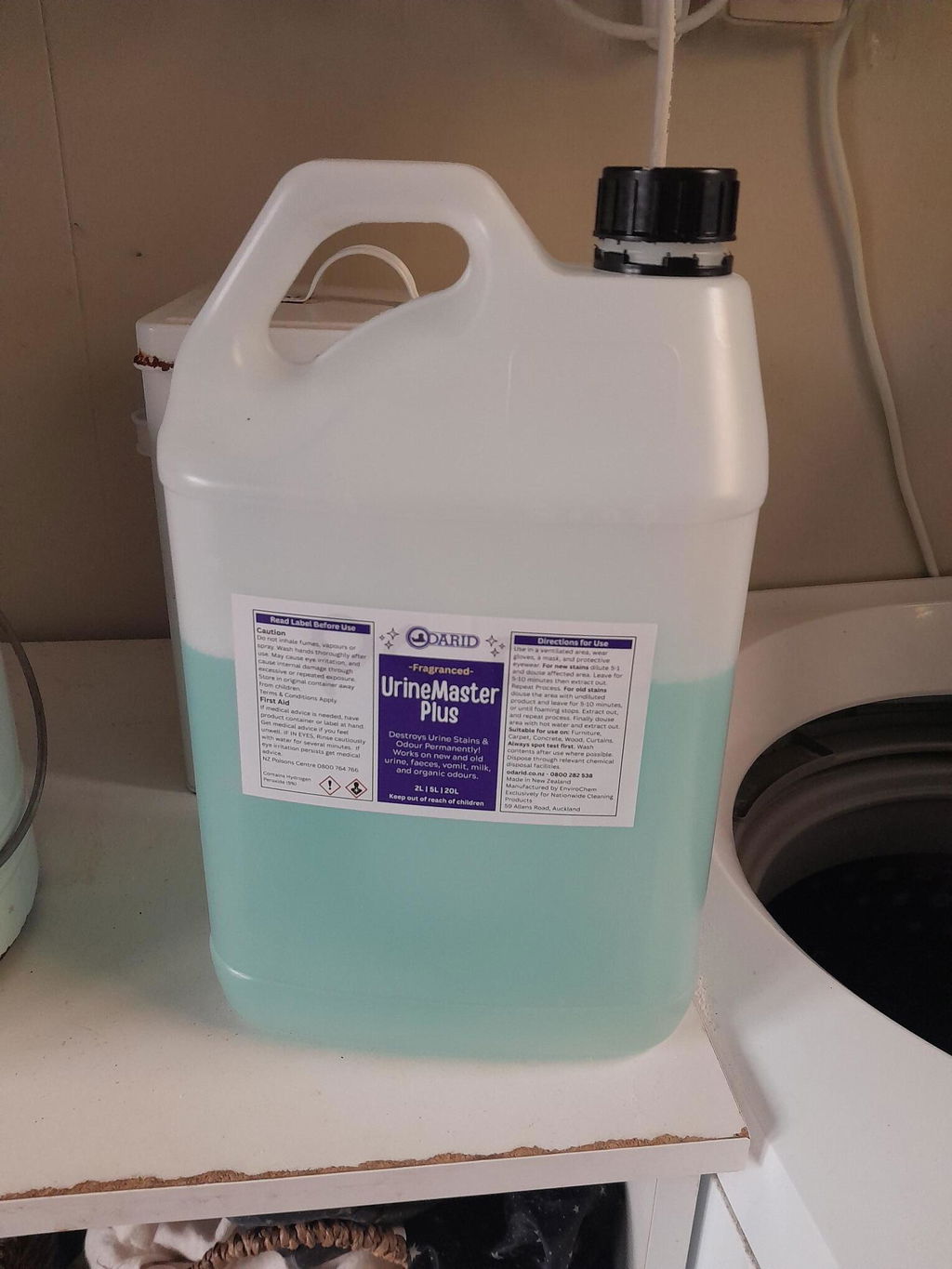
Next, use a purpose-made urine odour remover designed to break down organic contamination at a molecular level. This matters. General household cleaners are made to clean surfaces. Urine remediation products are made to eliminate the actual source of the smell. A hydrogen peroxide-based or enzyme-based treatment can be effective, depending on the age and severity of the contamination, because it targets the compounds causing the odour instead of masking them.
Apply enough product to reach where the urine went, but do it in a controlled way. If the urine penetrated into the timber, a light mist will not be enough. The affected boards need proper saturation of the problem zone without flooding the floor. Let the product dwell for the full recommended time. Rushing this step is one of the main reasons people get poor results.
After treatment, allow the boards to dry fully and reassess once the room is back to normal temperature. Some jobs improve dramatically after one application. Others need a second round, especially if the contamination is old or repeated. That is normal. Deep-set odours often need more than one pass because the urine has built up in layers.
What not to use on urine-soaked floorboards
Bleach is a common mistake. It may disinfect some surface bacteria, but it does not reliably remove old urine odour from timber. On some floors it can damage the finish, affect the colour, and still leave the smell behind.
Steam cleaning is another risky option. Heat can intensify urine smells and, on timber, too much moisture and heat are a poor combination. You may end up with a stronger odour and a floor finish problem.
Vinegar gets recommended often, but it is not a miracle fix for old urine in wood. It can help with some surface smells, yet once the contamination is deep in the floorboards, vinegar usually falls short. Air fresheners and scented cleaners are the same story. They may make the room smell nicer for a while, but they do not solve the cause.
When the smell is in sealed, varnished, or painted boards
Finished boards can be deceptive. The coating may stop some liquid, but once urine gets through a gap or worn patch, the finish can actually trap the odour underneath. In these cases, cleaning the top layer alone often gives mixed results.
If the floor is sealed and the smell keeps returning after treatment, you may be dealing with contamination that has moved under the coating or into the joins between boards. Sometimes the best result comes from treating the joins thoroughly, allowing full dry time, and then reassessing whether sanding and resealing is needed.
Sanding can help, but only if the contamination is relatively shallow. If urine has soaked through the full thickness of the board or into the subfloor, sanding off the top surface may reduce the smell without removing it completely. That is the trade-off. Sanding is useful for some floors, but it is not always the full answer.
Remove old urine smell floorboards in rentals and older homes
Older homes often have wider board gaps, worn coatings, and years of absorbed moisture. That makes them more likely to hold onto odours. Rentals can be even trickier because you may be dealing with accidents that happened long before you moved in.
In these situations, manage expectations at the start. If the smell has been there for years, or if multiple pets have repeatedly used the same area, one clean may not completely restore the space. You can still get a major improvement, but severe contamination may need a combination of targeted odour treatment, sanding, sealing, or in extreme cases board replacement.
This is also where using a professional-strength product matters. A tested, formulated urine remover is far more likely to give a genuine result than a supermarket cleaner made for general mess. Cleansmart’s approach is built around this exact principle - eliminate the source, do not perfume over it.
Signs you may need more than cleaning
If the odour returns every humid day, if the stain has turned the timber dark black or grey, or if the smell remains strong after two proper treatments, the urine may have penetrated beyond the recoverable layer of the wood. The same applies if the subfloor or insulation beneath the boards has absorbed it.
That does not mean cleaning failed. It means the contamination is deeper than the surface system can reach. At that point, lifting a board, sealing the affected area after treatment, or replacing damaged sections may be the more cost-effective fix.
There is also a health and comfort factor. In homes with pets, children, or allergy-sensitive family members, lingering odour can keep a room feeling unclean even when it looks tidy. Getting rid of the source properly is about more than smell. It restores confidence in the space.
How to stop urine odour coming back
Once you have treated the floorboards, keep the area dry and well ventilated while it fully cures. If the accident was pet-related, make sure the behaviour side is handled too, otherwise repeat marking can undo your work. Some pets will return to the same area if even a faint trace remains.
For ongoing protection, clean accidents immediately, pay attention to board joins and edges, and avoid using products that leave sticky residues or heavy fragrance behind. The cleaner and more neutral the surface remains, the less chance of odour building up again.
Old urine in timber is one of those jobs where the right method makes all the difference. If you treat the source properly, even a floor that has smelled off for a long time can come right. And when the room no longer announces its history the moment the sun hits the boards, you will know the job was actually done.