That sharp, stale cat wee smell has a way of taking over a room - even after you’ve blotted, scrubbed, aired the place out and sprayed half the cupboard. If you’re searching for how to remove cat urine smell permanently (NZ guide), the key is simple: stop treating the smell on the surface and start breaking down the urine at the source.
Cat urine is one of the toughest household odours to remove because it doesn’t behave like a normal spill. It soaks deep into carpet backing, underlay, timber joins, grout lines, mattress foam and soft furnishings. Once it dries, the odour compounds stay behind. Add moisture from humid weather, steam cleaning or even a rainy Auckland week, and that smell can come roaring back.
Why cat urine smell keeps coming back
The reason most DIY attempts fail is that they only clean what you can see. The visible patch might be gone, but the urine salts and odour-causing compounds are often still sitting below the surface. Fragranced sprays make this worse. They can make a room smell cleaner for an hour or two, but they do not eliminate the source.
Cat urine is especially stubborn because of its chemistry. As it breaks down, it releases ammonia-like odours and leaves crystals behind that reactivate with moisture. That’s why a carpet can seem fine one day, then suddenly smell again after a damp morning or a deep clean.
There’s also a practical issue. Cats tend to return to places they can still smell. So if even a trace remains, your cat may treat that same spot as an approved toilet area. Permanent removal is not just about your nose. It’s also about removing the scent marker your cat can detect.
How to remove cat urine smell permanently in NZ homes
The right method depends on where the urine has landed and how long it has been there. Fresh accidents are easier to fix than old, dried-in contamination, but both can be treated properly.
Step 1: Blot first, don’t scrub
If the urine is fresh, absorb as much as possible with paper towels or a clean dry cloth. Press firmly. Stand on the towel if needed to draw liquid up from the carpet pile. Avoid scrubbing. Scrubbing pushes urine wider and deeper into fibres and underlay.
If the accident is on upholstery or a mattress, the same rule applies. Blot patiently before applying anything else.
Step 2: Skip hot water and supermarket fragrance sprays
Heat can set odours deeper, especially in soft surfaces. Steam cleaning too early can make the problem harder to solve if the urine hasn’t been chemically broken down first. The same goes for standard carpet shampoos and air fresheners. They might improve the smell briefly, but they usually leave the source untouched.
Vinegar and baking soda get talked about a lot, and they can help reduce light odours in some cases. But if you’re dealing with true cat urine contamination, especially in carpet, rugs or furniture, they are often not enough on their own. This is where many households lose time and money trying one home remedy after another.
Step 3: Use a product designed to break down urine odour, not cover it
To permanently remove cat urine smell, you need a formulation that targets the compounds causing the odour. A proper pet urine treatment works below the surface and breaks down the residue at a molecular level. That is the difference between masking and eliminating.
In Kiwi homes, that matters because urine rarely stays in one neat layer. It moves through carpet into underlay, into floor joins, and into porous materials. A targeted urine odour remover gives you a far better chance of complete removal than a general-purpose cleaner.
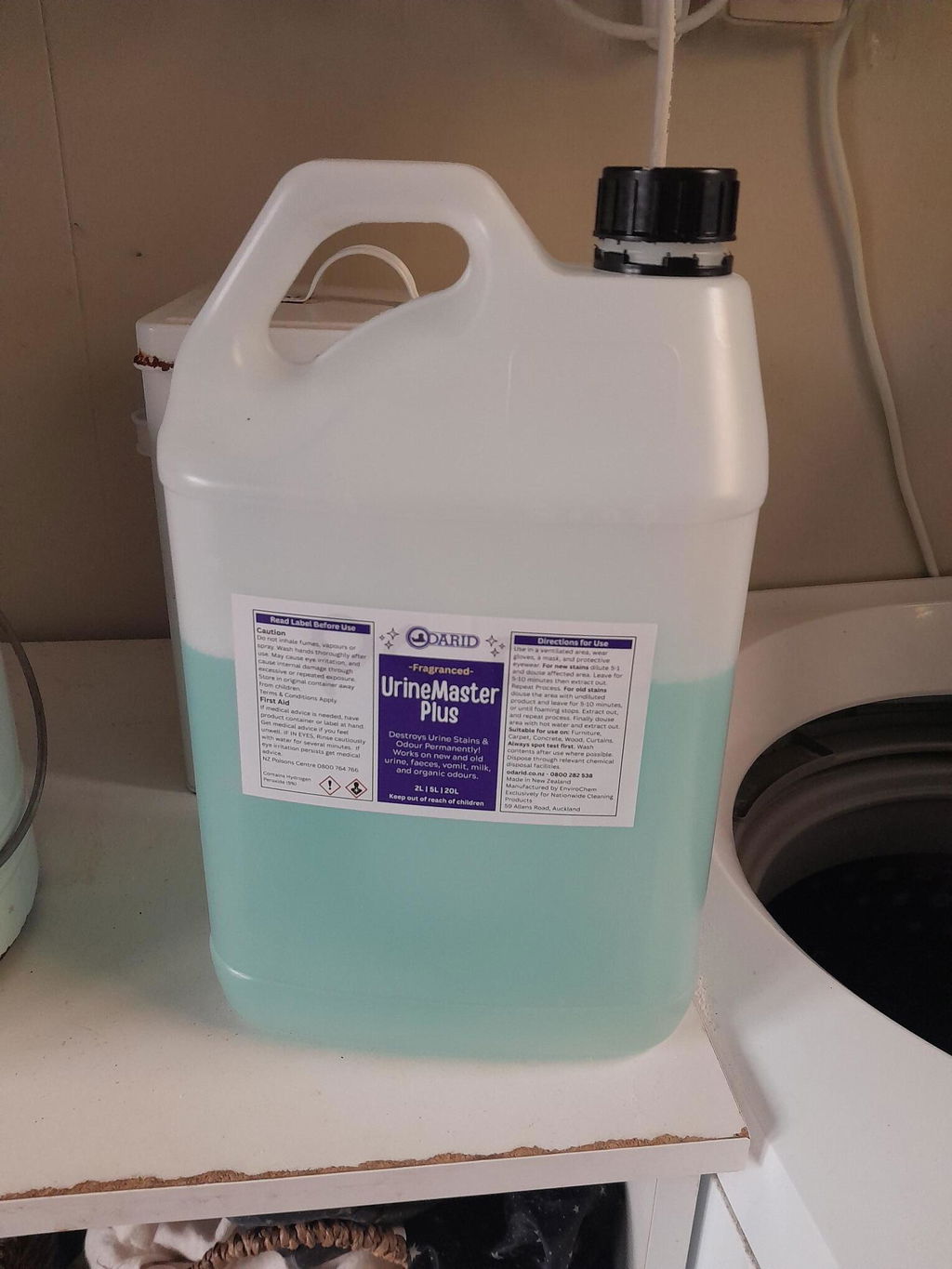
Products such as Odarid are designed for exactly this problem - permanent urine odour and stain removal on carpets, rugs, upholstery, mattresses and hard floors. The advantage of a tested, formulated solution is that it is built to destroy the source of the smell rather than perfume over it.
Step 4: Saturate the full affected area
This is the part many people underdo. If the urine spread into the underlay or foam, lightly misting the top is not enough. You need to apply enough product to reach the same depth as the urine. For dried spots, that usually means treating an area larger than the visible stain.
If you know roughly where the cat urinated, treat beyond the edges. Urine can travel sideways under the surface. On carpet, the affected zone is often bigger than it looks.
Let the product dwell for the time recommended on the label. Rushing this step reduces effectiveness. The chemistry needs time to work through the contamination.
Step 5: Blot and allow it to dry properly
After treatment, blot any excess moisture if the instructions call for it, then allow the area to dry naturally. Good airflow helps. Open windows, use a fan, and keep pets off the area until fully dry.
Do a smell check only once the surface has dried. Wet fibres can still carry a temporary scent. If there is any remaining odour after drying, repeat the treatment. Stubborn spots, especially old ones, may need a second application because the contamination has built up over time.
The best approach for different surfaces
Carpet and rugs
Carpet is the most common problem area because it traps urine in layers. For one-off fresh accidents, fast blotting and a proper urine remover are often enough. For repeated accidents in the same spot, underlay contamination may be involved. In that case, thorough saturation is essential.
If the smell remains after multiple correct treatments, inspect beneath the carpet if possible. Sometimes the underlay or subfloor has absorbed too much urine for a surface-only fix.
Upholstery and mattresses
Soft furniture and beds absorb quickly and hold odour deep in the filling. Apply enough solution to match the depth of the accident, not just the top fabric. Always patch test first on a hidden area, especially with delicate materials.
Mattresses can be saved if treated early and thoroughly, but old or repeated cat urine in deep foam can be difficult. It depends on how far the contamination has spread.
Timber, laminate and hard floors
Hard floors sound easier, but they can be deceptive. If urine has seeped into timber joins, edges, grout or cracks, surface mopping will not solve it. Use a urine odour remover that can penetrate porous gaps, and wipe away excess properly. On sealed surfaces, success is usually straightforward. On unsealed timber, results depend on how deeply the urine has soaked in.
When DIY works - and when it probably won’t
If the accident is fresh, isolated and on a treatable surface, DIY can work very well with the right product and technique. That’s the good news.
Where it gets harder is with old urine, repeated marking, hidden spots, or damage that has reached underlay, floorboards or wall linings. If you can still smell urine after proper repeated treatment, the issue may be structural rather than surface-level. In rentals and property sale situations, this matters. Lingering odours can affect inspections, tenancy disputes and general liveability.
A UV torch can help identify older spots, especially if your cat has been marking in more than one place. There is little point treating one corner properly if two more unseen patches are driving the smell elsewhere.
How to stop the smell coming back for good
Permanent odour removal is half the job. The other half is preventing repeat marking.
First, make sure the litter tray situation is right. Many cats urinate outside the tray because it is dirty, poorly placed, shared with another cat, or the wrong type for them. Second, rule out health issues. If your cat suddenly starts weeing indoors, a vet check is worth doing. Urinary problems, stress and territorial behaviour are common triggers.
Third, clean accidents quickly and completely every time. Once a cat identifies an area as a toilet spot, the habit can be hard to break. Proper odour elimination removes the scent cue and gives you a clean slate.
For households dealing with repeat pet accidents, keeping a professional-strength urine odour remover on hand is simply practical. It saves re-cleaning, protects carpets and furniture, and avoids that cycle of spray, wait, smell, repeat.
The good news is that cat urine smell does not have to be something you put up with. With the right treatment, applied deeply enough and early enough, even strong odours can be removed properly. And when the source is gone, your home smells like home again - not like a problem waiting to resurface on the next damp day.