That sinking feeling usually hits about two seconds after you notice the smell. The dog has claimed the armchair, the cat has gone back to the same couch cushion, and now you are dealing with both the stain you can see and the odour you definitely can. If you are wondering how to clean pet stains from upholstery without setting the stain, spreading it, or making the fabric smell worse, the good news is this: fast action and the right chemistry matter far more than aggressive scrubbing.
Pet accidents on upholstery are different from spills on hard floors. Fabric, foam, batting and timber framing can all absorb liquid at different rates, which is why a surface wipe rarely fixes the problem. You might remove the visible mark and still leave urine residues sitting deeper in the cushion. That is where repeat accidents and lingering smells start.
How to clean pet stains from upholstery without making it worse
The first rule is simple: do not soak the area with random cleaners and hope for the best. Over-wetting can push urine deeper into the cushion insert and underlay, making removal harder. It can also leave water rings, affect fabric dyes, or encourage mildew if the upholstery dries slowly.
Start by blotting. Use clean, dry towels or paper towels and press firmly into the affected area to lift as much moisture as possible. Stand on the towel if the cushion is thick enough to take some pressure. Rubbing is the wrong move here because it spreads the stain and roughs up the fabric fibres.
Once you have removed the excess liquid, check the care label if there is one. Upholstery fabrics vary widely. Some can handle water-based treatment well, while others respond better to low-moisture cleaning. If the piece is vintage, silk-blend, velvet, or labelled dry-clean only, caution matters. In those cases, spot testing in a hidden area is non-negotiable.
The next step is choosing a stain and odour remover that does more than perfume the area. Pet urine is not just a yellow mark. It contains uric compounds, proteins and bacteria byproducts that bond to fibres and keep releasing odour, especially in warm or humid conditions. A product designed to break down the source at a molecular level will outperform a general-purpose fabric spray every time.
Treat the stain and the odour together
This is where many people waste time and money. One product is used for the stain, another for the smell, and neither fully removes the underlying residue. If the odour remains, pets often return to the same spot.
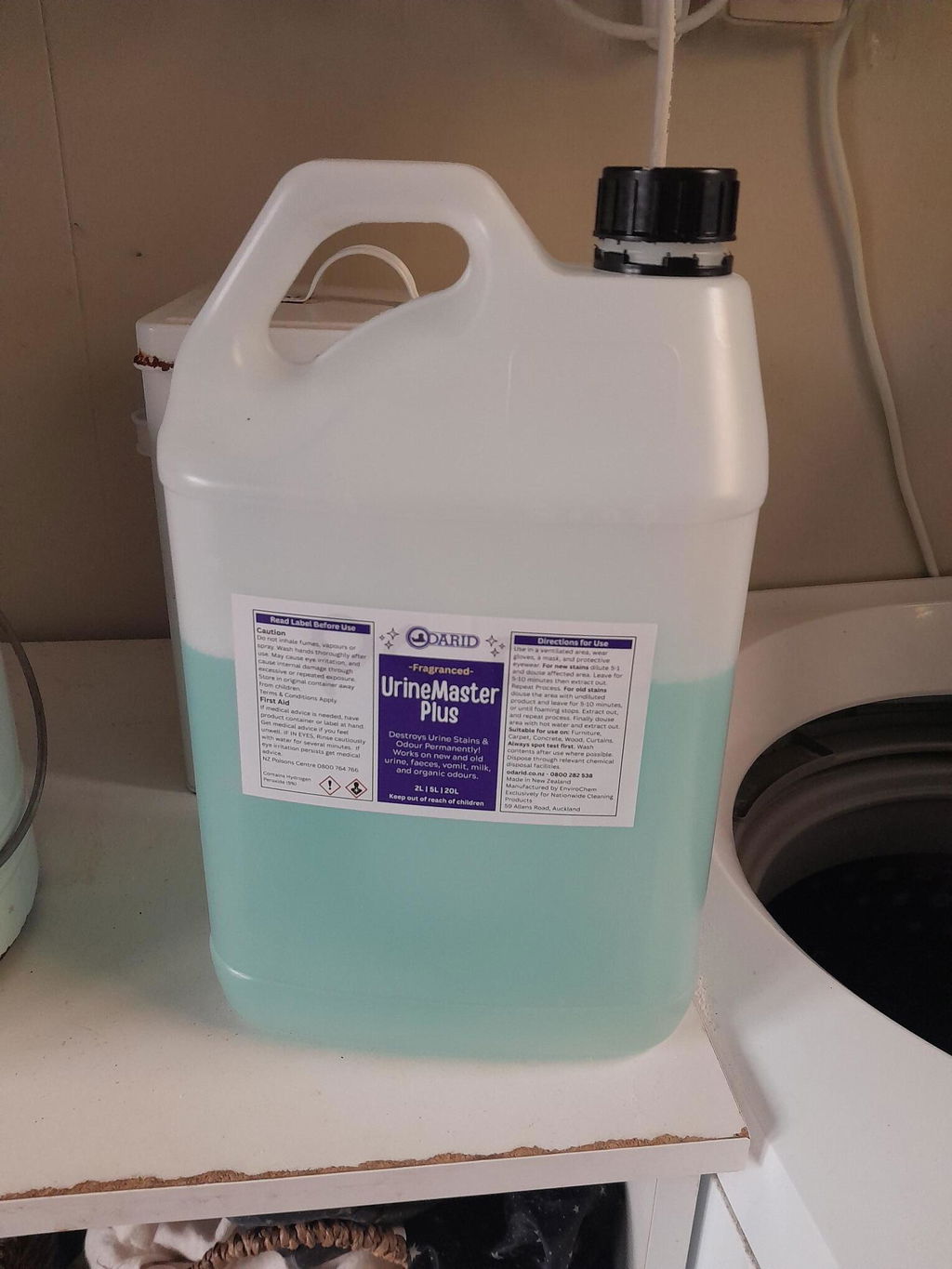
A proper pet stain treatment should target both issues at once. Enzyme-based and peroxide-based formulations are commonly used because they work on the organic matter causing the problem rather than covering it with fragrance. It depends on the fabric and the age of the stain, but the goal is the same - break down the contamination, lift discolouration, and leave no residue behind that continues to smell.
Apply enough product to reach the contamination, but not so much that the entire cushion becomes saturated. That balance matters. On a fresh surface accident, light to moderate application is often enough. On an older stain that has dried into the fabric and foam, you may need a more thorough treatment, sometimes repeated, because the original accident likely travelled further than the visible mark suggests.
Let the product dwell for the recommended time. This is another point where people rush. If the formula needs contact time to break down urine compounds, wiping it off too early cuts its effectiveness. Blot again after dwell time, then allow the area to dry fully.
Airflow helps. Open windows, run a fan, and if possible remove loose cushions so both sides can dry. In many Kiwi homes, especially through colder or damper months, slow drying is what turns a pet accident into a musty upholstery problem.
Fresh stains versus old set-in stains
Fresh accidents are always easier to deal with. The urine has not fully dried, oxidised or bonded into the fabric, so you have a better chance of complete removal in one go. Quick blotting followed by a targeted pet odour and stain remover usually gives the best result.
Old stains are more stubborn because the visible mark may only be part of the issue. Dried urine crystals can reactivate with humidity and start smelling again weeks later. That is why some sofas seem fine after cleaning, then suddenly stink on a warm afternoon. The source was never fully removed.
For set-in stains, it often helps to treat beyond the edges of the visible mark. Urine spreads unpredictably through padding and fabric backing. If you only clean the obvious centre, you can leave contaminated material around it. A second application may be necessary, especially in multi-pet homes or if the accident went unnoticed for a while.
There is also a trade-off with delicate fabrics. You want enough product to reach the contamination, but not so much that you risk water marks or texture changes. For linen-look upholstery, pale fabrics and absorbent weaves, slow and controlled application is usually better than flooding the area.
What not to use on pet-stained upholstery
Harsh household shortcuts create plenty of extra work. Hot water can set some stains. Steam cleaning too early can do the same, particularly if urine residues are still present. Strong ammonia-based cleaners are another poor choice because ammonia smells similar to urine and may encourage pets to revisit the spot.
Dishwashing liquid has its place on some soils, but it is not a complete answer for pet urine. It may clean the surface while leaving odour compounds behind. Fabric softeners and scented sprays are worse again if your goal is actual elimination. Masking is not removal, and pets are not fooled by perfume.
If you are tempted to scrub with a stiff brush, do not. Upholstery fibres can pill, distort or lighten under aggressive friction. A clean cloth, gentle blotting and the correct formulation will do more with less damage.
How to clean pet stains from upholstery on different fabric types
Not every couch responds the same way. Microfibre is usually more forgiving and often cleans well with careful spot treatment. Woven synthetic fabrics can also respond well, though textured weaves may hold onto residue deeper in the pattern.
Natural fibres need more care. Cotton blends can water-mark if over-wet. Linen can darken temporarily and may need more even drying to prevent tide lines. Velvet and brushed finishes can change texture after cleaning, so they should be treated gently and brushed back into place once dry if the manufacturer allows it.
Removable cushion covers give you more options, but do not assume the insert is unaffected. If urine has gone through to the foam, washing the cover alone will not solve the smell. The insert needs treatment too, or the odour will come back.
Leather is a different job altogether. Standard upholstery fabric cleaners are not automatically suitable for leather, and urine can affect its finish. If the accident is on leather furniture, use a leather-safe product and test first.
Preventing repeat accidents and long-term damage
Once the stain is gone, prevention becomes the smart move. Pets often return to spots they can still smell, even when people cannot. That makes complete odour removal the first layer of prevention.
The second is protection. Fabric protection treatments can help upholstery resist future spills and accidents, buying you more time to blot before liquid soaks in. They are not a licence to ignore a mess, but they can make cleanup far easier and reduce staining risk on sofas, dining chairs and pet-favourite cushions.
If accidents are recurring, look at the bigger picture as well. Stress, age, territorial behaviour and medical issues can all drive repeat marking. Cleaning the upholstery properly matters, but so does stopping the source.
For households that are sick of trial-and-error products, Cleansmart focuses on formulations that remove the problem at the source - no masking, no gimmicks, just targeted treatment for stains and odours in real Kiwi homes.
When to call in professional help
Some upholstery accidents are beyond a simple spot clean. If the stain covers a large area, has reached deep into fixed seating, or has been treated repeatedly with multiple products already, a professional upholstery cleaner may be the better option. The same applies if the furniture is expensive, delicate, or holds strong sentimental value.
That said, professional help is not always necessary. Many pet stains can be handled successfully at home if you act quickly, use a purpose-built solution, and avoid over-wetting the fabric. The biggest difference usually comes down to whether you are removing the source or just cleaning the surface.
A pet accident on the couch does not need to ruin the furniture or the room. Get to it early, treat the odour and stain together, and be patient with drying. Done properly, upholstery can come back clean, fresh, and ready for everyday life again.