If your artificial grass smells fine after rain but turns sour the moment the sun hits it, dog urine is usually the reason. The grass itself is not the problem. It is the urine residue sitting in the fibres, backing, infill, and base underneath. If you only rinse the surface, the smell often comes back.
That is why knowing how to clean artificial grass dog urine properly matters. You are not trying to perfume the area or give it a quick cosmetic wash. You need to flush out residue, break down the urine source, and stop odour build-up before it becomes a permanent part of the backyard.
How to clean artificial grass dog urine the right way
The right method depends on how bad the problem is. A fresh wee patch is easy. A turf area used every day by one or more dogs needs a deeper approach, especially in warm weather when odours get stronger.
Start with the simplest rule - deal with urine early whenever you can. Fresh urine is much easier to remove than dried residue that has had time to soak into the base. If you spot your dog toileting in one area, hose it down promptly. A thorough rinse helps dilute the urine and push it through the drainage holes before crystals and bacteria start building up.
For routine cleaning, use a garden hose with enough pressure to flush the area properly. A light sprinkle is not enough. You want to rinse deeply, not just wet the blades. Focus on the spots your dog returns to most often. Many dogs have a preferred toilet corner, and that is where odour problems usually start.
If the smell is already noticeable, plain water may reduce it for a day or two, but it usually will not solve it. Urine contains uric acid and other compounds that cling on stubbornly. Once they dry into the turf system, they need more than a rinse. This is where an odour-eliminating treatment makes the difference.
Why artificial grass still smells after rinsing
A lot of people assume artificial grass should be easy to keep clean because it does not absorb urine the way natural grass or carpet does. That is only partly true. Synthetic turf drains well, but urine does not magically disappear. Some of it passes through. Some remains trapped in the fibres, infill, or lower layers, especially if the area is used heavily or drainage is less than ideal.
Heat makes the issue worse. On a cool day, the smell may seem mild. On a hot afternoon, urine residue warms up and the odour becomes obvious fast. That is why many Kiwi pet owners notice the problem more in summer, even if the grass has been hosed regularly.
Drainage also matters. If your turf was installed over a compacted base with poor run-off, or if debris has built up over time, urine can linger below the surface. In that case, treating only the top layer will help, but may not fully fix the issue. You need to clean deeply enough for the product and rinse water to reach where the residue is sitting.
The best way to remove dog urine odour from artificial turf
First, clear away any solid waste, leaves, and loose debris. That stops extra organic matter from interfering with the cleaning process. Then hose the affected area generously.
Next, apply a urine odour remover designed to eliminate the source rather than cover it with fragrance. This matters. Standard household disinfectants or heavily perfumed cleaners can make the area smell different for a short time, but they do not always break down the urine compounds causing the problem. Some can also be too harsh for regular use around pets.
A targeted pet urine treatment with an enzyme-based system is usually the better fit. Enzymes work by attacking the organic residue left behind, helping break it down at a molecular level. That is the difference between temporary freshness and proper odour removal.
Apply the product generously to the urine-affected area. Do not just mist the surface. You need enough coverage for it to move into the fibres and backing where the residue sits. If the smell is strong, treat a slightly larger area than the obvious patch, because urine often spreads wider than you expect.
Let it dwell for the time recommended on the label. This part matters. Rushing straight to rinse can weaken the result. Once the treatment has had time to work, rinse again if required by the product directions. For stubborn areas, a second treatment may be needed.
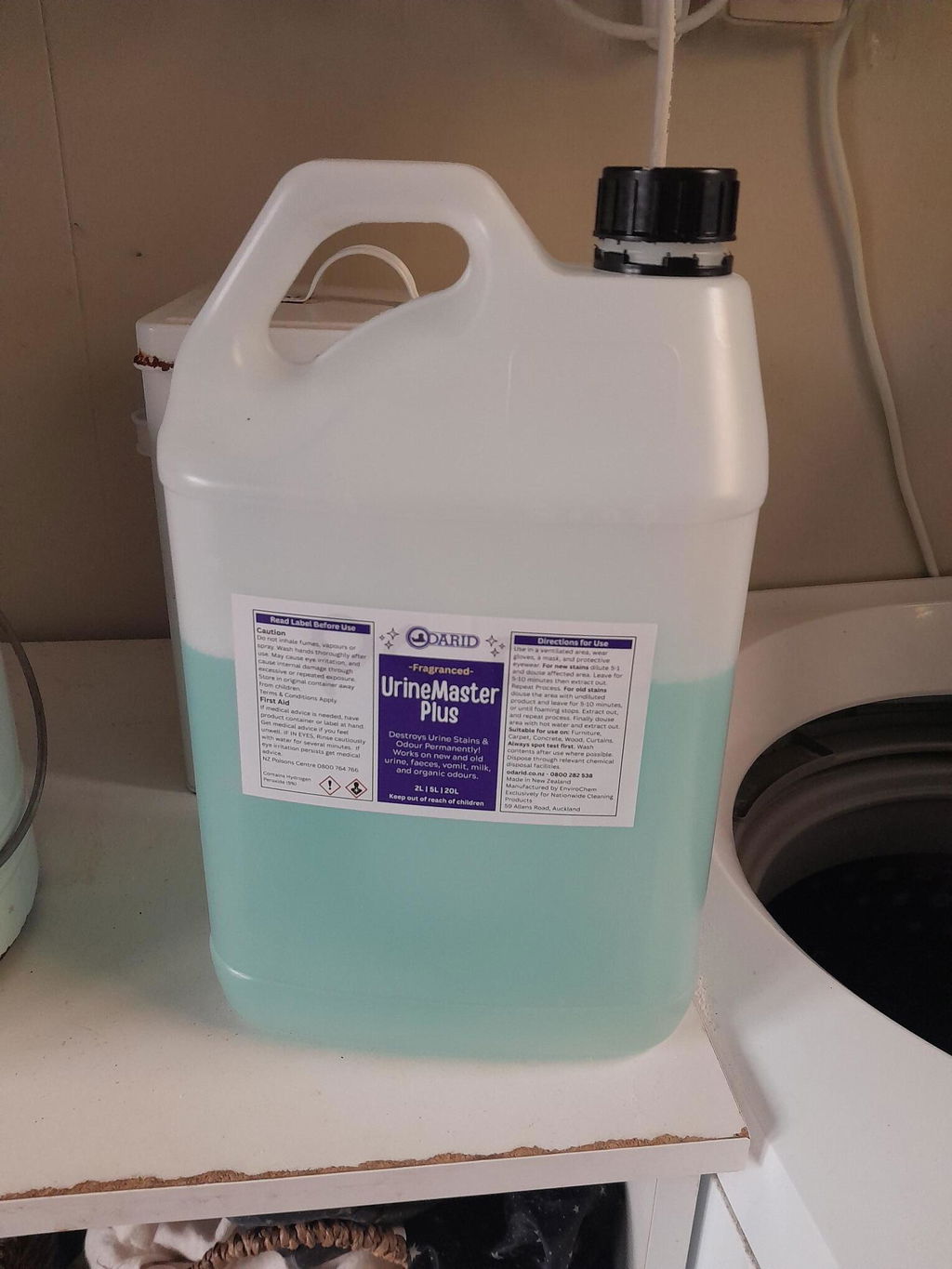
For pet owners dealing with repeat-use turf, a product such as Odarid can make maintenance far easier because it is formulated to tackle urine odour at the source, not mask it. That is what keeps the area genuinely usable for pets, kids, and bare feet.
What not to use on artificial grass
It is tempting to throw every old cleaning trick at a urine smell, but some methods create more problems than they solve.
Bleach is one of them. It may seem like a strong sanitiser, but it is not a great answer for dog urine on artificial grass. It does not reliably break down the full urine residue causing odour, and repeated use can be unnecessarily harsh around pets and outdoor surfaces.
Heavily scented cleaners are another common mistake. If the smell disappears for an hour then comes back mixed with fake lemon or floral perfume, you have not fixed the issue. You have just layered scent over urine.
Steam cleaning and high-pressure blasting can also be risky if overdone. Too much force may disturb the infill, damage joins, or push contamination deeper into the base rather than lifting it out. A normal hose rinse and the right treatment product are usually safer and more effective.
How often should you clean artificial grass if dogs use it?
That depends on the number of dogs, the size of the area, the weather, and how often your turf is used as a toilet. A small townhouse lawn with two dogs needs more attention than a large section where urine is spread out.
As a general routine, rinse toilet areas several times a week if they are used often. In hot weather, daily rinsing can help prevent odour build-up. Then use a proper urine odour treatment as part of regular maintenance, not just when the smell becomes impossible to ignore.
If you have multiple dogs, an older dog with frequent accidents, or a small enclosed courtyard with limited airflow, you may need to clean more aggressively. There is no one perfect schedule. The test is simple - if you can smell it, residue is still there.
Preventing future odours on pet-friendly turf
Good maintenance makes a big difference, but there are limits. Artificial grass used as a dog toilet will always need some level of active cleaning. The goal is not zero effort. The goal is easy control before the problem gets embedded.
Rinsing little and often works better than waiting for a major smell issue. Keeping leaves and debris off the turf helps too, because trapped organic matter can hold moisture and add to odour. If your dog always chooses the same patch, pay extra attention there rather than treating the whole lawn lightly.
Some homeowners also train dogs to use one designated toilet zone. That can make cleaning simpler, especially in smaller Kiwi homes where outdoor space is limited. It is not essential, but it does help keep the rest of the lawn fresher.
If odours keep returning even after proper treatment, the issue may be below the surface. Infill contamination, poor drainage, or long-term build-up in the base can all contribute. At that point, deeper restoration may be needed rather than just another surface clean.
When a quick rinse is enough and when it is not
For one fresh urine spot, especially after recent installation and with good drainage, a thorough hose-down may be enough. That is the easy end of the scale.
If the turf smells repeatedly, if the odour worsens in heat, or if guests notice it before you do, you are past the quick-rinse stage. You need a product that targets urine residue properly and enough volume to reach below the surface. That is the trade-off many people miss. Light maintenance is fine for light use. Heavy use needs a stronger response.
Artificial grass should make life easier, not leave your backyard smelling like a kennel. With the right approach, you can keep it clean, pet-friendly, and fresh without constant scrubbing or gimmicky cover scents. Treat the source, stay ahead of build-up, and your turf will stay far more pleasant to live with.