That nasty whiff that keeps coming back after you have cleaned the spot twice is usually the moment people start searching for an enzyme urine remover effectiveness review. Fair enough. Pet urine is one of those household problems that exposes weak cleaning products fast. If a formula only freshens the surface or covers the smell with perfume, the odour returns as soon as the area warms up or gets damp again.
For Kiwi homes with dogs, cats, puppies, senior pets, or the occasional accident on carpet, rugs, mattresses, couches, grout, or timber, the real question is not whether a product smells pleasant after use. It is whether it removes the urine compounds properly. That is where enzyme-based removers earn their reputation - but only when the formulation is sound and the product is used the right way.
Enzyme urine remover effectiveness review - what actually matters
Not all urine removers are doing the same job. Some are deodorising sprays. Some are stain lifters. Some are disinfectants. A proper urine remover needs to deal with the source of the smell, not just the symptom.
Pet urine is more complex than a simple wet stain. Once it sinks in, it spreads through fibres, underlay, grout lines, wood joins, or upholstery foam. As it dries, urine leaves behind compounds such as uric salts that can keep producing odour. That is why a patch can smell fine one day and then suddenly stink again in humid weather.
Enzyme products are designed to break down organic matter so those lingering compounds can be removed rather than hidden. In a good formulation, this gives you a much better shot at permanent odour removal. In a poor one, you get a short-lived improvement and then the smell creeps back.
The biggest factor in effectiveness is contact with the full contamination area. If the urine has soaked deep but the cleaner only wets the top layer, results will be patchy. The second factor is formula quality. The third is how old the stain is. Fresh accidents are easier. Old, repeated marking spots are harder and often need more than one treatment.
Where enzyme urine removers perform well
A good enzyme urine remover can be excellent on fresh pet accidents in carpet, rugs, upholstery, soft furnishings, pet bedding, and mattresses. These are exactly the situations where organic residue gets trapped in porous material and keeps releasing odour over time.
When the product reaches the affected area fully, enzyme action can break down the waste matter that ordinary sprays leave behind. That matters for smell, but it also matters for behaviour. If a dog or cat can still detect the old urine scent, even if you cannot, they may return to the same spot.
This is why performance should be judged over days, not minutes. The real test is simple: does the smell stay gone, and does the pet stop remarking that area? If yes, the remover is doing its job.
Enzyme systems are especially useful in homes where fragrance-heavy cleaners are a problem. Many households do not want strong perfumes around children, pets, or allergy-sensitive family members. A product that removes odour at the source is simply a better fit than one that tries to overpower it.
Where enzyme urine removers can disappoint
This is the part many reviews skip. Enzyme cleaners are not magic, and they are not the right answer in every case.
If urine has soaked through carpet into underlay or subfloor, even a strong formula may need repeated saturation to reach the full area. On sealed hard floors, results are usually quicker because there is less depth to penetrate. On old timber, cracked grout, or deeply padded furniture, the job gets harder.
Some products are also marketed as enzyme cleaners when they are really light deodorisers with a faint biological story attached. They may improve the smell briefly but do not have the strength needed for serious odour removal. That is often why customers think enzyme products do not work, when the bigger issue is that they have used a weak formula.
Application errors cause a lot of disappointment too. Scrubbing immediately, using too little product, or following with another cleaner can reduce performance. Bleach, heavy disinfectants, or strongly alkaline cleaners may interfere with enzyme action depending on the formulation. If you throw three different products at the same patch, it becomes harder to know what is actually working.
Enzyme urine remover effectiveness review - how to judge a product fairly
The fairest way to assess any urine remover is to look past the marketing and test it against practical household realities.
First, ask whether it removes both odour and stain. Some products do one better than the other. A stain may lighten while the smell remains. Or the smell may improve while a yellow ring is still visible. The strongest products tackle both, but you still need realistic expectations based on the surface involved.
Second, pay attention to whether the odour returns after drying. A quick fresh smell right after spraying proves very little. True effectiveness shows up once the area is fully dry and lived on again.
Third, consider the treatment area. If a cat has repeatedly used the same corner of carpet over weeks, one round may not be enough. That does not necessarily mean the formula has failed. It may mean the contamination has spread wider and deeper than expected.
Finally, read reviews with context. One household may be treating a fresh puppy accident on a rug. Another may be dealing with months of urine in a rental property. Those are not equal jobs. Good review patterns tend to mention lasting odour removal, reduced remarking, and success on difficult soft surfaces.
What separates a serious urine remover from a supermarket spray
The difference usually comes down to formulation intent. A supermarket cleaner is often built to be broad and cheap. It may clean a range of everyday spills reasonably well, but pet urine is not an everyday spill.
A serious urine remover is designed around a specific problem: breaking down odour-causing residue in porous surfaces. That often means stronger active ingredients, better dwell performance, and chemistry focused on elimination rather than masking.
This is where targeted products stand out. In New Zealand homes, that matters because pet accidents often happen on surfaces people want to protect for years - wool carpet, mattresses, couches, mats, and indoor-outdoor areas. You do not want a perfumed cover-up. You want the source gone.
Professional-grade options can also pair enzyme action with other odour-breaking technology for a more complete result. That combination tends to outperform products that rely on fragrance or surface cleaning alone. Cleansmart, for example, is known for problem-solving formulas that target the cause of odour rather than trying to hide it.
Best use cases and realistic expectations
For fresh accidents, enzyme removers are often the best first choice. Act quickly, blot up excess urine, apply enough product to reach the same depth as the accident, and allow proper dwell time. In many cases, that is enough to remove both stain and smell effectively.
For older stains, be prepared for a slower result. You may need repeat applications, especially on carpet, upholstery, or mattresses. If the smell improves each time, that is a good sign the cleaner is reaching more of the residue.
On artificial turf, concrete, and outdoor pet areas, enzyme products can help, but the performance depends on drainage, sun exposure, and how much residue has built up over time. Some surfaces may need flushing and repeated treatment rather than a one-off spray.
For severe or repeated contamination, the most honest answer is this: it depends. If urine has saturated underlay, timber, or foam over a long period, even the best cleaner may not restore the area completely without deeper remediation. A good product can still reduce odour significantly, but sometimes the material itself has been too heavily affected.
So, are enzyme urine removers effective?
Yes - when the formula is strong, the contamination is fully treated, and expectations match the surface and age of the stain. That is the honest result of any worthwhile enzyme urine remover effectiveness review.
They are far more effective than ordinary scented cleaners for true urine odour problems. They are especially useful in homes where pets keep returning to the same spot, because removing the scent source matters as much as cleaning the visible mess. But they are not foolproof if you under-apply, rush the process, or expect a surface-only spray to fix a deep soak.
If you are choosing one for your home, look for a product that talks clearly about odour elimination, not just freshness. Favour targeted formulations over generic cleaners. And judge success after the area is dry, not while the room still smells like added fragrance.
The best urine remover is not the one that smells strongest after spraying. It is the one that leaves nothing for your nose - or your pet's nose - to find tomorrow.
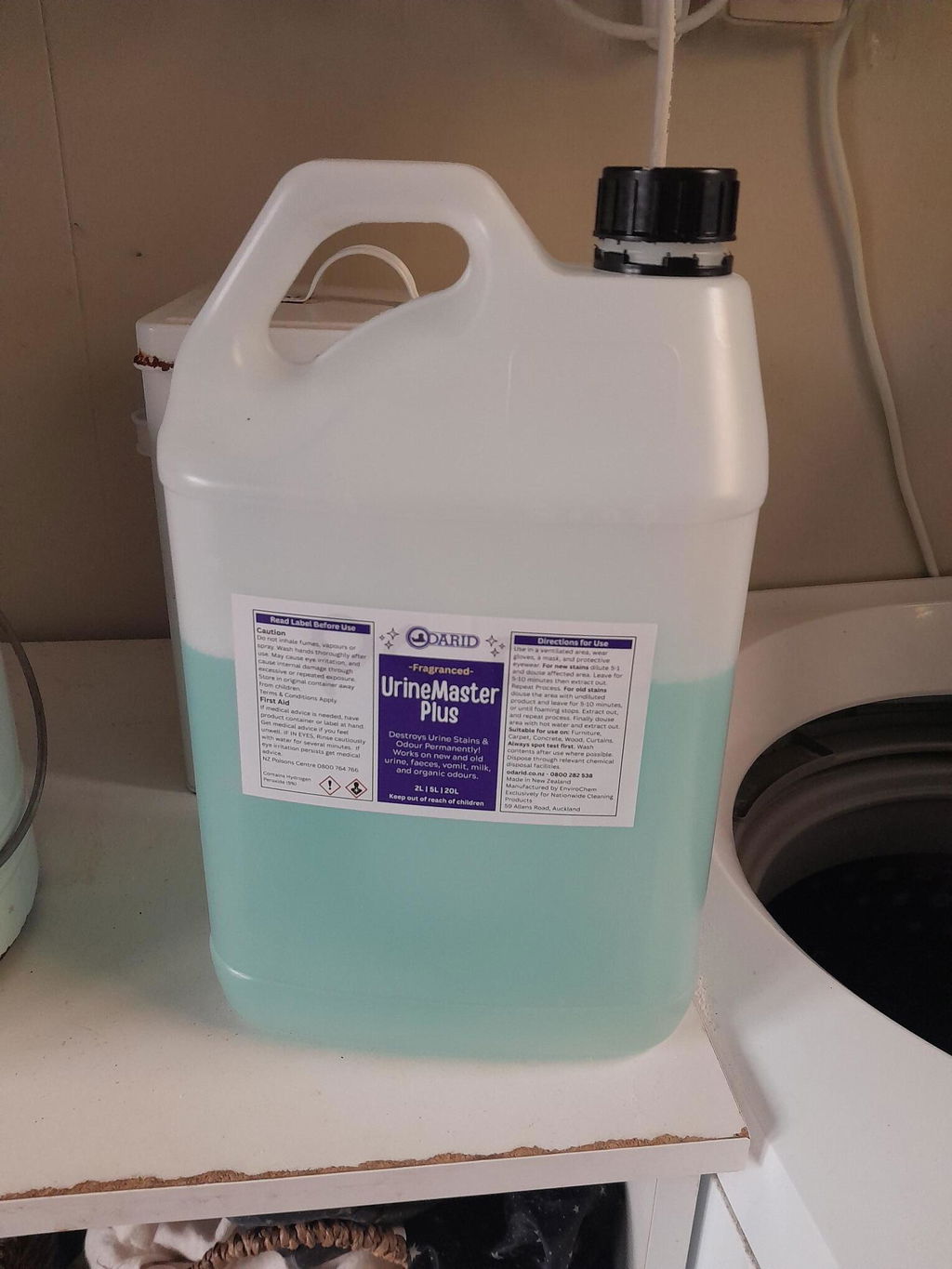
See how Odarid compares for real results
Hydrogen peroxide versus enzymes: read the reviews, then decide for yourself.
Shop Odarid →750+ five-star reviews on Odarid alone · NZ-made, family-run since 2004