By Robyn, Founder of Cleansmart NZ · Last updated: August 2026
The fastest way to remove a carpet stain is to blot it immediately — never rub — then treat it with the method that matches the stain type: club soda or dish soap for fresh spills, a baking soda and vinegar paste for stains that have started to set, and a hydrogen peroxide-based cleaner for stubborn organic marks like pet urine, old stains, or ones other products have already failed on. Acting in the first few minutes makes the biggest difference to whether a stain lifts completely or leaves a mark behind.

In a hurry? Skip to the fix.
Odarid breaks down urine odour at the source in 30–60 seconds — no scrubbing, no guesswork. NZ-made and safe once dry.
Get rid of the smell for good — Shop Odarid →Why Does Blotting Matter More Than the Product You Use?
Rubbing a fresh stain pushes it deeper into the carpet fibres and can spread it sideways, which is why even a good stain remover struggles once that's happened. Blotting with a clean cloth or paper towel — pressing straight down and lifting, not scrubbing side to side — lifts the liquid out before it has a chance to set. This one habit matters more than which product you reach for next.
How Do You Remove Different Types of Carpet Stains?
Different stains respond to different treatments. Here's what actually works for each:
Fresh drink and food stains (coffee, wine, juice)
- Blot, don't rub. Lift as much of the spill as possible with a clean cloth before treating it.
- Club soda. Pour a small amount onto the stain and blot. The carbonation helps lift it to the surface — best used while the stain is still fresh.
- Dish soap and warm water. A few drops of dish soap in warm water lifts many everyday stains. Apply, let it sit a few minutes, blot, then rinse.
Set-in or older stains
- Baking soda and vinegar paste. Mix into a paste, apply to the stain, and leave for a few hours before gently scrubbing with a brush and rinsing with water.
- Hydrogen peroxide. Dilute with water and apply to the stain, leave for a few minutes, then blot. Always patch test first — hydrogen peroxide can lighten some dyes.
Grease, gum, and wax
- Cornstarch for grease. Sprinkle over the stain, leave for a few minutes to absorb the grease, then vacuum. Repeat if needed.
- Ice for gum or wax. Freeze it with an ice cube in a plastic bag until hard, then scrape off gently with a spoon or dull knife.
- Shaving cream. Works on a surprising range of everyday stains — apply, leave a few minutes, blot, then rinse.
Pet urine, old, and previously-treated stains
- A dedicated carpet stain remover. Choose one designed for the type of stain you're dealing with, and follow the label — generic sprays that only mask odour usually let the mark and smell return.
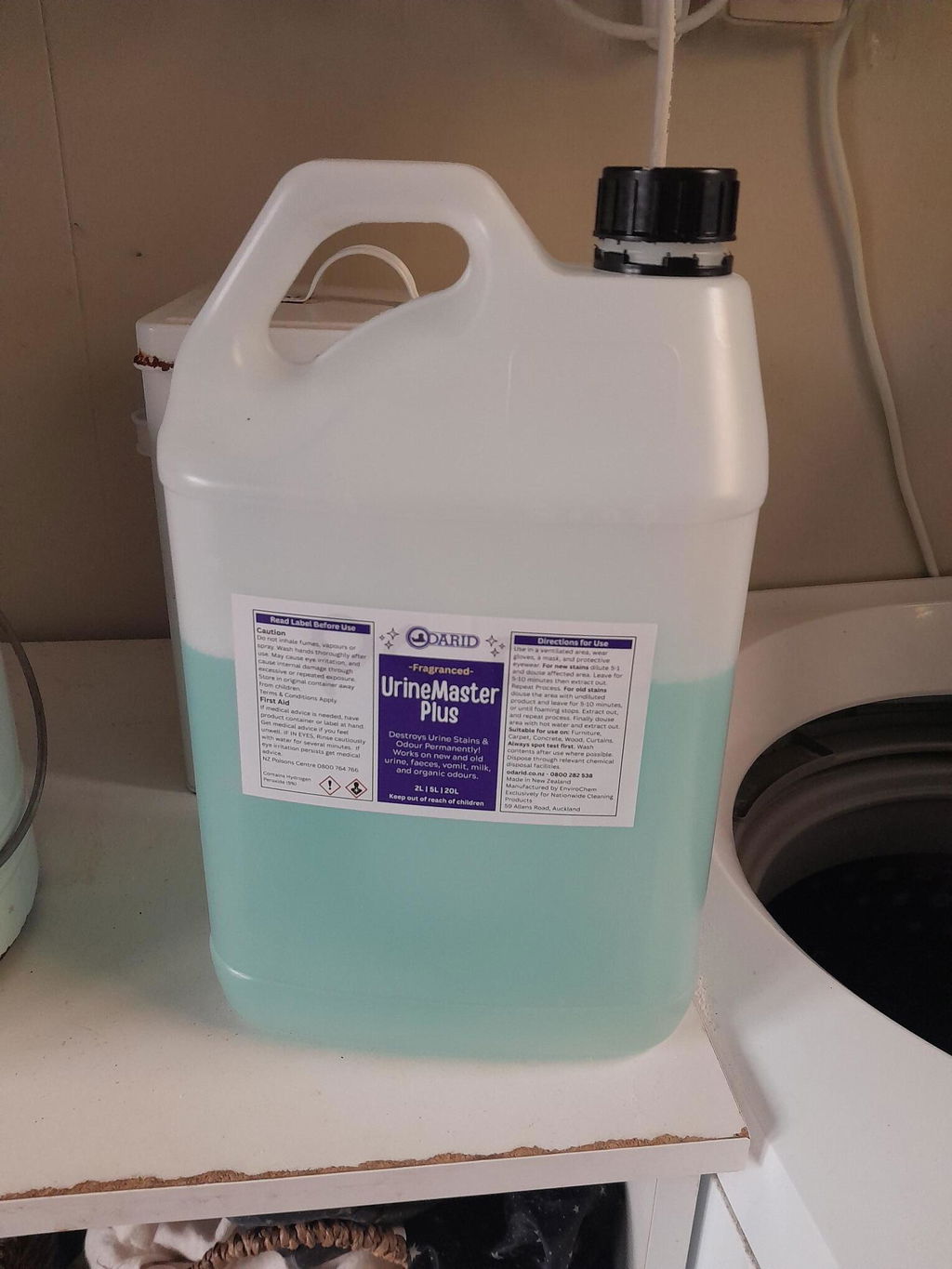
- Odarid for organic and set-in stains. For pet urine, old dried-in marks, or stains other products haven't fully shifted, Odarid's hydrogen peroxide formula breaks down the uric acid crystals and bacteria at the source rather than masking them. No scrubbing — spray until saturated and leave it to work, with visible results in as little as 30–60 seconds on fresh marks.
Should You Use a Homemade Remedy or a Dedicated Stain Remover?
For fresh, light stains — a coffee spill caught within minutes, a bit of mud — the homemade options above are genuinely effective and cost nothing extra. Where they fall short is on anything organic, old, or already set in: pet urine, dried-in marks, or stains that have already been through a round of DIY treatment and come back. Household remedies can lift the visible mark without addressing what's causing it to return, particularly with pet stains, where uric acid crystals left behind will keep attracting odour and re-staining until they're actually broken down.
Why Do Some Carpet Stains Keep Coming Back?
A stain that reappears after cleaning almost always means the source wasn't fully removed, only the surface mark. Common reasons:
- Residue left in the fibres attracts dirt, so the spot looks like it's "coming back" as it re-soils faster than the carpet around it.
- With pet urine specifically, uric acid crystals are left behind if the treatment only masks odour rather than breaking the crystals down — they reactivate and smell again in warm or humid weather.
- The stain wasn't treated deep enough into the pile or underlay, so what looks clean on the surface still holds the stain underneath.
How Do You Stop Carpet Stains From Setting In the First Place?
Treating stains fast is the best defence, but a fabric protector applied to carpets and rugs ahead of time makes spills bead on the surface instead of soaking in, buying enough time to blot before it sets — worth considering in high-traffic areas or homes with kids and pets, where spills aren't a matter of if but when.
Frequently Asked Questions
Should I rub or blot a carpet stain?
Always blot. Rubbing pushes the stain deeper into the fibres and can spread it, making it harder to fully remove.
Does hydrogen peroxide bleach carpet?
It can lighten some dyes, particularly on older or non-colourfast carpet, so always patch test an inconspicuous area first. Purpose-made products like Odarid are formulated to be used on carpet as directed, but testing first is still good practice.
What's the best way to remove old, set-in carpet stains?
Baking soda and vinegar can help lift set-in stains, but for organic marks like pet urine, a hydrogen peroxide-based product that breaks down the stain at the source works more reliably than surface treatments, since it addresses what's causing the stain to persist rather than just the visible mark.
Are DIY carpet stain removers (baking soda, vinegar, dish soap) actually effective?
Yes, for fresh and light stains. They're less reliable on old, set-in, or organic stains where the substance causing the mark and odour needs to be broken down rather than lifted off the surface.
How do I stop a carpet stain from coming back after cleaning?
Make sure the treatment reaches the full depth of the stain, not just the visible surface — this is especially important for pet urine, where leftover uric acid crystals will keep attracting re-staining and odour until they're fully broken down.
Cleansmart Odarid Pet Odour & Stain Remover — for the stains other products can't shift.
New Zealand-made, hydrogen peroxide formula, no scrubbing required. Available in 500ml, 2 litre and 5 litre sizes, Fragrant and Non-Fragrant. Backed by a 30-day guarantee.
Still smelling something?
If the natural methods haven't fully cracked it, Odarid will. Hydrogen-peroxide formula, made right here in NZ.
Get rid of the smell for good — Shop Odarid →